

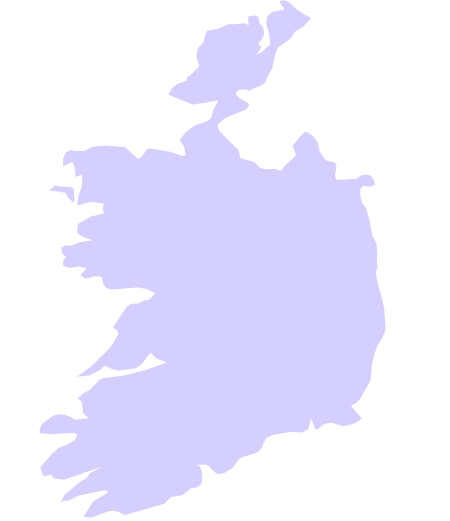


Get into a university in Ireland with EduWorld in 5 steps

01
Needs assessment
- Analysis of country, city and lifestyle preferences
- Matching the right type of university
- Choosing a degree programme and career path
RIGHT DEGREE PROGRAMMES
APTITUDE TEST
PERSONALISED STRATEGY
02
Degree programmes and plan
- Selection of suitable programmes
- Plan A, B and C
- Strategy based on entry score thresholds
CHOICE OF UP TO 20 PROGRAMMES
TAILORED OPTIONS
MAXIMISING YOUR CHANCES
03
Profile and report
- Requirements report
- Plan for maximising your chances
- Plan for additional activities
STRONG APPLICANT PROFILE
TAILORED ACTIVITIES
COMPETITIVE ADVANTAGE
04
Application
- Submission of all applications
- Preparation of your CV, letter and portfolio
- Exam preparation
APPLICATION FROM A TO Z
MAXIMUM EFFECTIVENESS
POLISHED DOCUMENTS
05
Organisation
- Choosing accommodation (including student halls)
- Scholarship applications
- Preparing for departure and settling in
ALL FORMALITIES
SUPPORT AT EVERY STAGE
A STRESS-FREE START
01
Needs assessment
- Analysis of country, city and lifestyle preferences
- Matching the right type of university
- Choosing a degree programme and career path
RIGHT DEGREE PROGRAMMES
APTITUDE TEST
PERSONALISED STRATEGY
02
Degree programmes and plan
- Selection of suitable programmes
- Plan A, B and C
- Strategy based on entry score thresholds
CHOICE OF UP TO 20 PROGRAMMES
TAILORED OPTIONS
MAXIMISING YOUR CHANCES
03
Profile and report
- Requirements report
- Plan for maximising your chances
- Plan for additional activities
STRONG APPLICANT PROFILE
TAILORED ACTIVITIES
COMPETITIVE ADVANTAGE
04
Application
- Submission of all applications
- Preparation of your CV, letter and portfolio
- Exam preparation
APPLICATION FROM A TO Z
MAXIMUM EFFECTIVENESS
POLISHED DOCUMENTS
05
Organisation
- Choosing accommodation (including student halls)
- Scholarship applications
- Preparing for departure and settling in
ALL FORMALITIES
SUPPORT AT EVERY STAGE
A STRESS-FREE START

Let's talk about your studies in Ireland
We will contact you within 24 hours to arrange a convenient time for a free consultation.
During the free consultation, we will discuss the key aspects of studying in Ireland and the application process. We will also answer all your questions about studying abroad.
Book a free consultation
Student life - adventure and growth

Open-minded people
Irish people are known for their friendliness and direct approach, which really makes it easier to settle in. You will find it easier to meet people, settle into university life and quickly feel comfortable in your new surroundings.
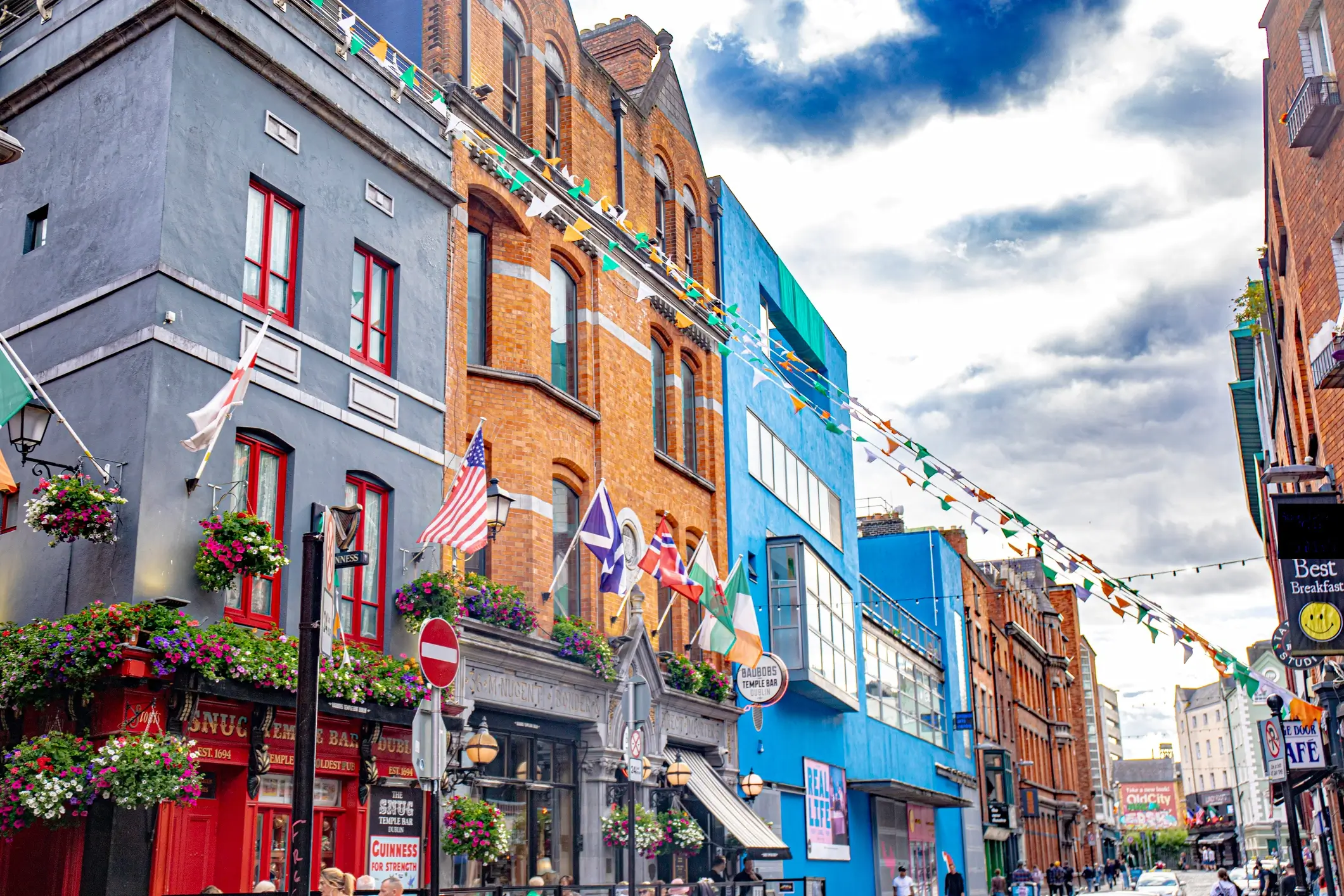
Cities to suit everyone
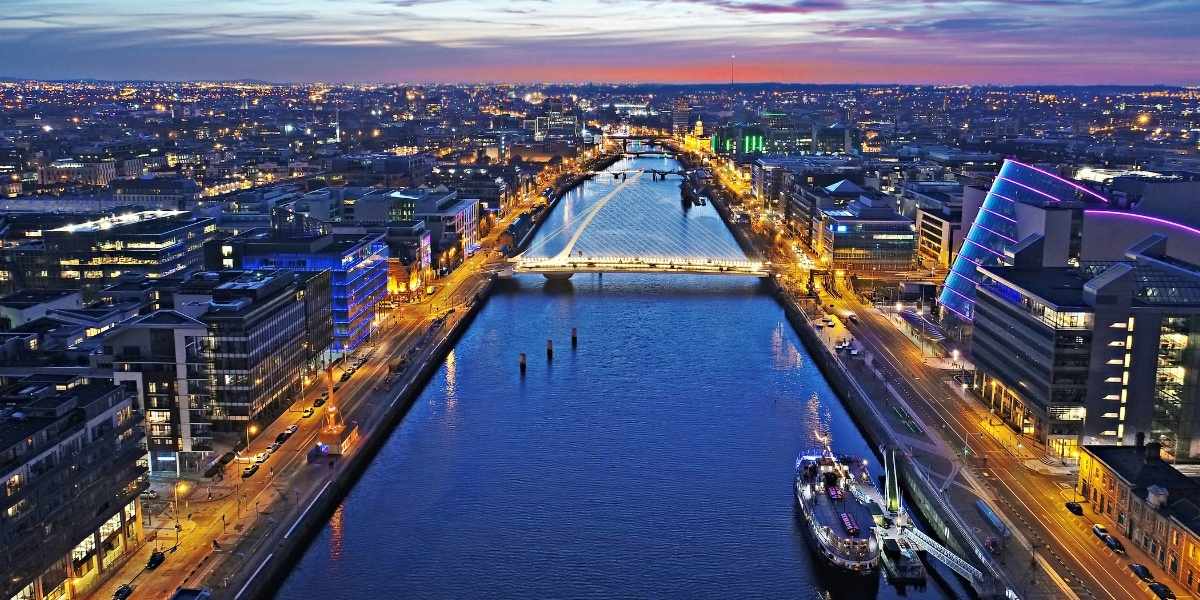
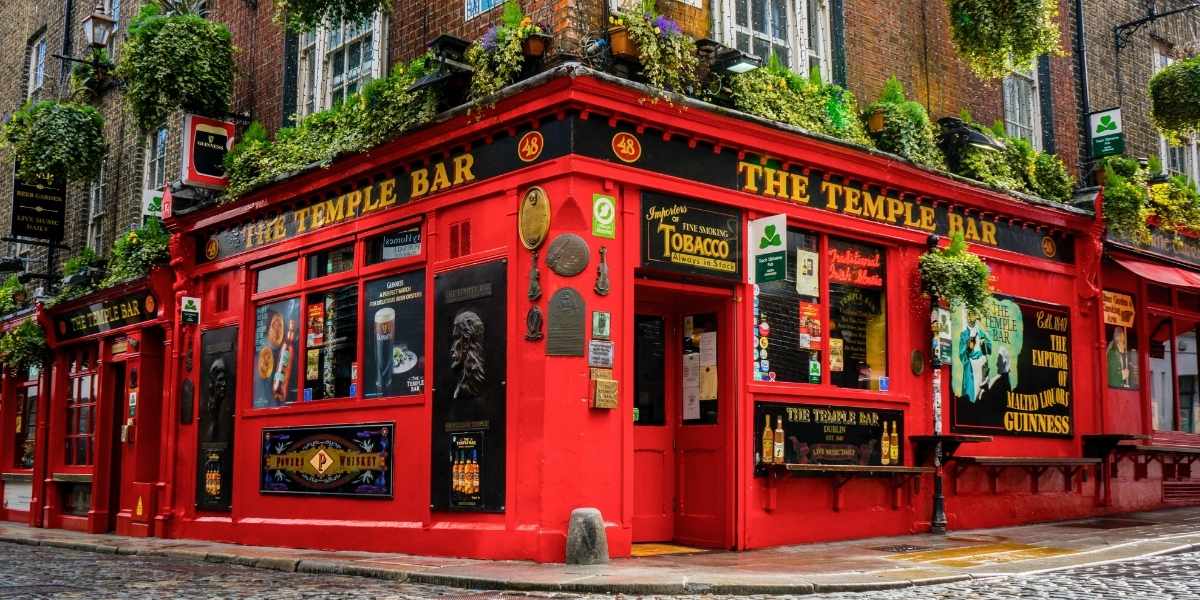
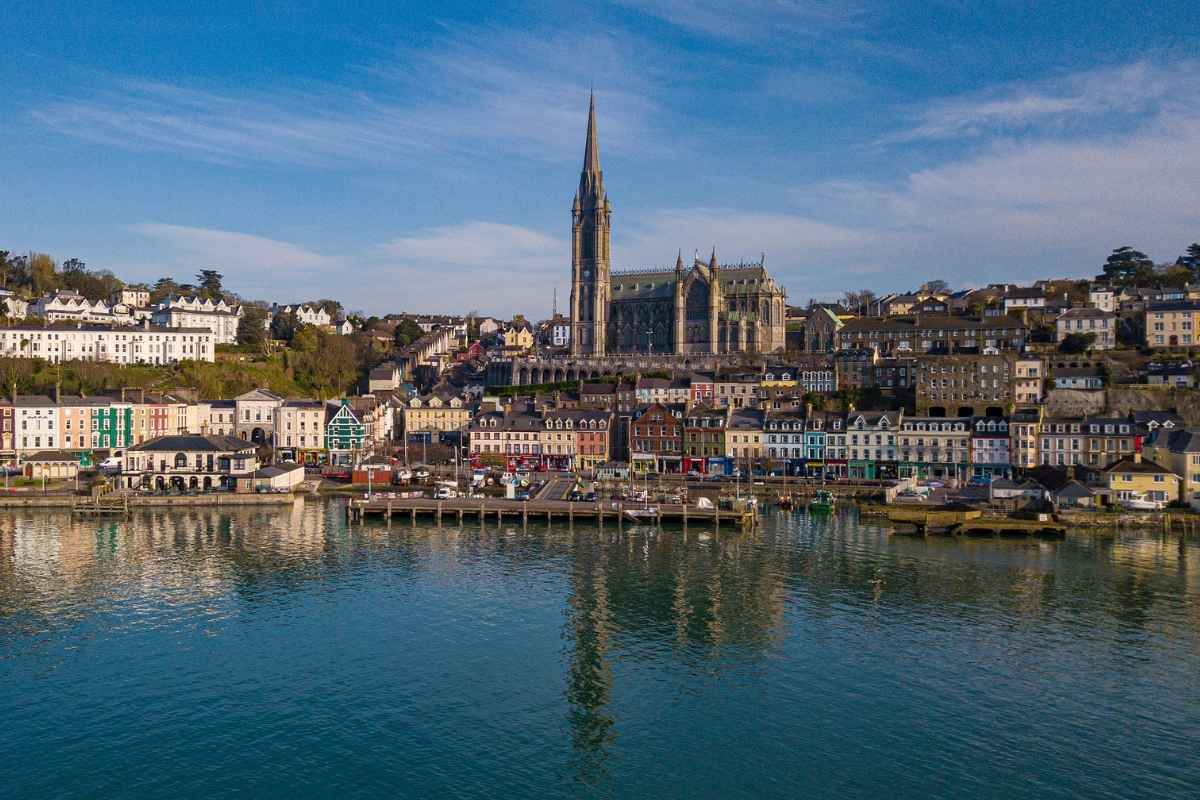
You can choose the large, dynamic city of Dublin or more intimate cities such as Galway, Cork or Limerick. This makes it easier to match your lifestyle, budget and the atmosphere of the place to your own preferences.

Everyday life in English
You study and live in English every day, not only during classes. This is a huge advantage if you want to quickly achieve fluency in English. Additionally, you will not face a language barrier after moving.

Opportunity to work while studying
The high minimum wage means that part-time work can genuinely support your budget. This is important if you want to partially fund your everyday expenses while gaining your first work experience.











Tuition fees and scholarships

Tuition fees
Bachelor’s degrees in Ireland usually cost 3000 € per year, while master’s degrees cost from 3000 € to 14 000 € per year, depending on the degree programme and university.
3000 € / year

Cost of living
Students spend an average of 400€ to 600€ per month on food, transport, study materials and everyday expenses. This amount will of course depend on your lifestyle.
ok. 900 € - 1500 € / month

Accommodation
Accommodation is the biggest expense. Prices in Dublin are significantly higher than in other cities. Virtually every university also offers student halls.
ok. 500 € - 1000 € / month

Other costs
Students spend an average of 400€ to 600€ per month on food, transport, study materials and everyday expenses. This amount will of course depend on your lifestyle.
ok. 400 € - 600 € / month

Scholarships
In Ireland, scholarships depend mainly on your parents’ income. In practice, they can reduce tuition fees by half or fully exempt you from paying them.
50% - 100% tuition fee waiver

Family income as a criterion
The most important factor in receiving financial support is your family’s financial situation. To qualify for a scholarship, your household income must fall within a specific threshold.
Income-based scholarships

Student work
A major advantage of Ireland is its high minimum wage. Even part-time work can provide meaningful financial support and help you partially cover your living costs.
13,5 € + / hour
Applying to university in Ireland
Find out what the application process for studying in Ireland looks like, what the requirements are and what you can do to increase your chances of being admitted to a university in this country.
Application deadlines
For bachelor's degree programmes, applications are submitted through CAO - the first deadline in the CAO system is 1 February (covering a small number of programmes, e.g. medicine), while the main deadline is 1 May. Results are usually announced in the second half of August. Applications for master's degree programmes are submitted directly through university portals, and deadlines can vary considerably depending on the university and programme - they often fall between January and July.

Important information
Applications are submitted through the central CAO system, where you can choose up to 10 Level 8 degree programmes and up to 10 Level 7 degree programmes. You rank them in order of preference, which is crucial. There is no national limit on the number of master’s degree programmes you can apply for, but individual universities may impose their own limits.

How to get admitted?
Admissions are based mainly on final exam results converted into CAO points. Each degree programme has a specific points threshold, which changes every year. Additionally, some programmes may require advanced-level exams in specific subjects, and sometimes particular results (e.g. 50% in advanced-level biology). Entrance tests, a portfolio, CV, personal statement or interview are occasionally taken into account - unlike applications for master’s degree programmes, where these elements are often important.

Language requirements
Universities require proof of English proficiency, most commonly IELTS Academic (min. 6.0-6.5), TOEFL iBT or Cambridge. In many cases, the Polish school-leaving exam in English may be accepted as meeting the requirement (although not by all universities).

Degree programme selection strategy
In Ireland, choosing the right degree programmes is crucial - both in terms of meeting the requirements and creating an effective Plan A, B and C.

Let's talk about your studies in Ireland Text
We will contact you within 24 hours to arrange a convenient time for a free consultation.
During the free consultation, we will discuss the key aspects of studying in Ireland and the application process. We will also answer all your questions about studying abroad.
Book a free consultation
Discover your study abroad opportunities.
 100% free, no-obligation consultation
Connecting with you on your terms
Response within 24 hours
An individual approach to each candidate
By clicking the button, you consent to being contacted by phone, email, or WhatsApp to discuss study options in another country. Eduworld is the data controller. We process your data to process this inquiry. You have the right to access, correct, and request deletion of your data. Full information on how we ensure your security can be found on our website Privacy Policy.