



Student life - adventure and growth

International atmosphere
At universities, you will meet students from all over the world, which creates a dynamic environment and allows you to build global connections and intercultural skills from the very first year of study.

Rich life outside university
French cities offer cultural events, festivals, nightlife and numerous student organizations, making studies intense also outside the lecture hall.

A relaxed relationship with lecturers
Relationships are less formal than in Poland - you can more easily consult projects, ask questions and build relationships with professors, which supports development and networking.


Popular degree programs in France
The range of degree programs taught in English in France is particularly broad at public universities at master’s level and at private universities - both at bachelor’s and master’s level.





Popular universities in France
2 miesiące temu
6 minutes of reading
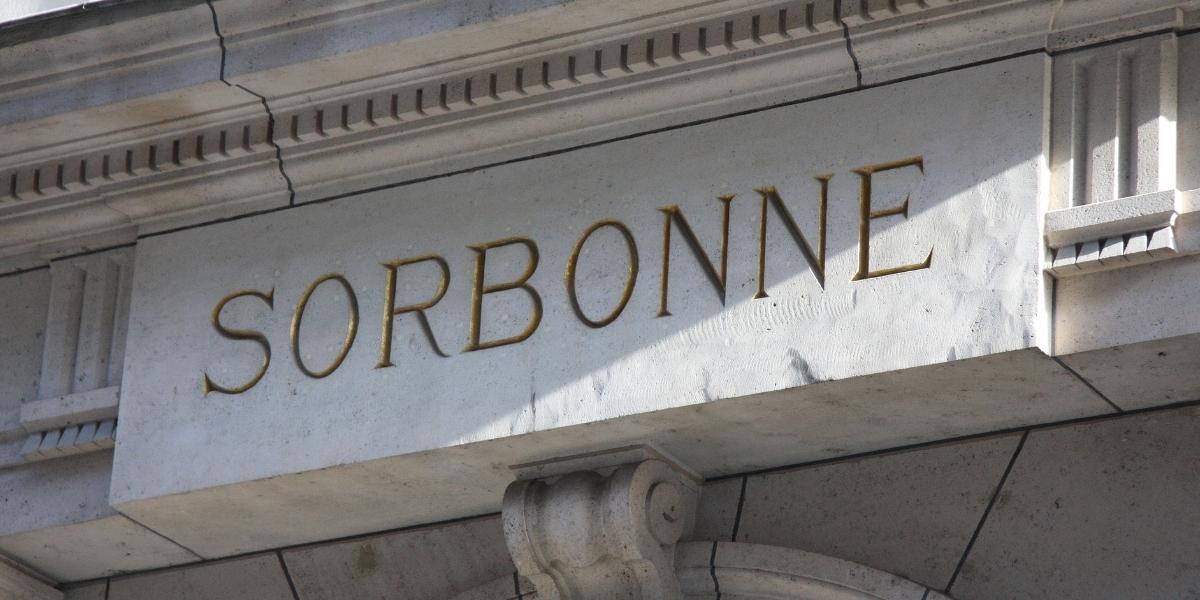
Sorbonne University (Uniwersytet Paryski) – kompleksowy przewodnik 2026/27
Sorbonne University to prestiżowa uczelnia publiczna w Paryżu, szczególnie mocna w naukach ścisłych, medycynie, humanistyce i badaniach interdyscyplinarnych. W artykule znajdziesz informacje o kierunkach po angielsku, rankingach, kosztach studiów, procedurach aplikacyjnych oraz życiu studenckim w Paryżu. Sprawdź, jak wygląda aplikacja na Sorbonne University w roku akademickim 2026/27 i czy Sorbona to dobra opcja dla kandydatów z Polski.

2 miesiące temu
6 minutes of reading
Université Paris-Saclay – najważniejsze informacje o uczelni w Paryżu 2026/27
Université Paris-Saclay to jedna z najmocniejszych uczelni badawczych w Europie, szczególnie ceniona za matematykę, fizykę, informatykę, inżynierię i life sciences. W artykule znajdziesz informacje o kierunkach po angielsku, wymaganiach rekrutacyjnych, kosztach studiów, rankingach oraz życiu studenckim w regionie Paryża. Sprawdź, jak wygląda aplikacja na Paris-Saclay w roku akademickim 2026/27 i czy to dobra opcja dla kandydatów z Polski zainteresowanych studiami STEM we Francji.

2 miesiące temu
7 minutes of reading
Sciences PO (Instytut Nauk Politycznych w Paryżu) – kompleksowy przewodnik 2026/27
Sciences Po Paris to elitarna francuska uczelnia specjalizująca się w naukach społecznych, polityce, ekonomii, prawie i stosunkach międzynarodowych. W artykule znajdziesz informacje o kierunkach po angielsku, rankingach QS, kosztach studiów, procesie aplikacji oraz życiu studenckim w Paryżu i kampusach regionalnych. Sprawdź, jak wygląda rekrutacja na Sciences Po w roku akademickim 2026/27 i czy to dobra opcja dla kandydatów z Polski zainteresowanych międzynarodową karierą w dyplomacji, polityce lub biznesie.

2 miesiące temu
7 minutes of reading
INSEAD – topowa uczelnia biznesowe na świecie – 2026/27 kompleksowy przewodnik
INSEAD to elitarna międzynarodowa szkoła biznesowa z kampusami we Francji i Singapurze, znana z topowych programów MBA, Master in Management i finansów. W artykule znajdziesz informacje o kierunkach po angielsku, rankingach Financial Times, kosztach studiów, terminach aplikacji oraz życiu studenckim na INSEAD. Sprawdź, jak wygląda rekrutacja do jednej z najbardziej prestiżowych szkół biznesowych na świecie i czy INSEAD to dobra opcja dla kandydatów z Polski planujących karierę w biznesie, konsultingu lub finansach.





Cost of studies and scholarships

Tuition
At public universities, you’ll pay approx. 170-650€ per year, while private universities usually have tuition fees of 7 000 - 11 500€ per year.
170-650€ per year

Cost of living
Average monthly expenses are 800–1200€, depending on the city. Paris is more expensive, while Lyon, Lille, Toulouse and smaller cities offer lower living costs.
800-1500€–1500€

Accommodation
Accommodation costs depend quite heavily on location - Paris is, of course, the most expensive. For renting a room on the private market or in a student residence in France, you’ll pay from 350€ to 850€, and for renting a studio / studio flat around 700 - 1200€ per month.
350€ - 850€ per month

Other costs
You’ll spend approx. 300–500 € per month on food, transport and everyday expenses, depending on your lifestyle.
300 € - 500 € / month

Scholarships
You can apply for CROUS support and other social programs. Scholarships often include accommodation and additional funding.

CROUS support
The CROUS system offers financial support, student residences and affordable cafeterias. This is real support for international students.

Student work
You can work during your studies. This is a popular option that helps cover part of your living costs.
10 € - 15 € / hour
Application to universities in France
Check how to get accepted to bachelor’s and master’s studies in France.
Application deadlines
For bachelor’s studies at public universities, you apply through Parcoursup from January to the end of March, and completing the application usually continues until the beginning of April. Results are released from June. The supplementary admissions round runs in the summer. For master’s studies, you apply directly through university websites - deadlines most often fall between January and March, but for many programs it is possible to apply even until May or June. Private universities often have later deadlines - even until the end of July.

Important information
As an EU citizen, you apply on similar terms as French candidates. In Parcoursup, you can choose up to 10 main degree programs, without ranking them in order of preference. After being accepted, you finalize your enrollment directly with the university.

How to get accepted?
For a bachelor’s degree, grades, school-leaving exam results and a complete application matter, and for selected degree programs also a CV, motivation letter, portfolio or interview. For a master’s degree, a bachelor’s degree diploma, transcript of grades, relevance of your degree program and often a CV, letter, essay or interview are required.

Language requirements
For programs taught in English, universities usually accept IELTS, TOEFL or Cambridge, most often at B2/C1 level. For programs taught in French, a DELF/DALF or TCF certificate is usually required, most often at B2 level, sometimes C1.

Application to private universities
Private universities often run their own admissions outside Parcoursup. Deadlines can be later, and the process is more individual. CVs, motivation letters, portfolios or interviews are often important. Remember that because of rolling admission, in some cases the sooner you submit your application, the greater your chances of getting accepted.
Get accepted to study in France with EduWorld in 5 steps

01
Needs assessment
- Analysis of country, city and lifestyle preferences
- Matching the right type of university
- Defining your degree path and career direction
WELL-MATCHED DEGREE PROGRAMS
APTITUDE TEST
INDIVIDUAL STRATEGY
02
Degree programs and plan
- Selection of matched programs
- Plan A, B and C
- Application strategy for different universities
STRONG STRATEGY
SELECTION OF THE BEST OPTIONS
MAXIMIZING YOUR CHANCES
03
Profile and report
- Requirements report
- Activity plan
EXCELLENT APPLICANT PROFILE
MATCHED ACTIVITIES
ADVANTAGE OVER COMPETITORS
04
Application
- Submitting all applications
- Preparing the CV, letter and portfolio
- Interview preparation
APPLICATION FROM A TO Z
MAXIMUM EFFECTIVENESS
POLISHED DOCUMENTS
05
Organization
- Choosing accommodation (including student residences)
- Scholarship applications
- Preparation for departure and adaptation
ALL FORMALITIES
SUPPORT AT EVERY STAGE
STRESS-FREE START
01
Needs assessment
- Analysis of country, city and lifestyle preferences
- Matching the right type of university
- Defining your degree path and career direction
WELL-MATCHED DEGREE PROGRAMS
APTITUDE TEST
INDIVIDUAL STRATEGY
02
Degree programs and plan
- Selection of matched programs
- Plan A, B and C
- Application strategy for different universities
STRONG STRATEGY
SELECTION OF THE BEST OPTIONS
MAXIMIZING YOUR CHANCES
03
Profile and report
- Requirements report
- Activity plan
EXCELLENT APPLICANT PROFILE
MATCHED ACTIVITIES
ADVANTAGE OVER COMPETITORS
04
Application
- Submitting all applications
- Preparing the CV, letter and portfolio
- Interview preparation
APPLICATION FROM A TO Z
MAXIMUM EFFECTIVENESS
POLISHED DOCUMENTS
05
Organization
- Choosing accommodation (including student residences)
- Scholarship applications
- Preparation for departure and adaptation
ALL FORMALITIES
SUPPORT AT EVERY STAGE
STRESS-FREE START


Let’s talk about your studies in France
We’ll contact you within 24h to arrange a convenient time for your free consultation.
During the free consultation, we’ll discuss the most important aspects of studying in France and the application process. We’ll also answer all your questions about studying abroad.
Book a free consultation
Discover your study abroad opportunities.
 100% free, no-obligation consultation
Connecting with you on your terms
Response within 24 hours
An individual approach to each candidate
By clicking the button, you consent to being contacted by phone, email, or WhatsApp to discuss study options in another country. Eduworld is the data controller. We process your data to process this inquiry. You have the right to access, correct, and request deletion of your data. Full information on how we ensure your security can be found on our website Privacy Policy.