

Start your journey
Do you dream of understanding
the world and people?
Studying social sciences abroad will allow you to analyse social, cultural and economic processes, develop research skills and build international connections.
Studying social sciences
abroad provides a better start
Explore how societies, cultures, ideas and interpersonal relationships function in a global environment.


Practical approach
Learn through social research, analytical projects and case studies on contemporary social phenomena. Develop critical thinking skills, the ability to interpret social phenomena and analyse culture, communication and ideas.


International perspectives
Explore different cultures, social systems and how economies and communication function in different parts of the world. Gain experience working in an international environment and build a global network from the first day of your studies.

Understanding global processes
Analyse contemporary social, cultural, political and economic challenges around the world. Discover how ideas, values and social change influence the development of countries and the functioning of societies.
This programme is ideal for you, if...

You are interested in the world and culture

You think analytically

You want to influence the world around you
Popular countries for studying social sciences










Popular universities for studying social sciences
 ° C
° C
KU Leuven

Belgium
 ° C
° C
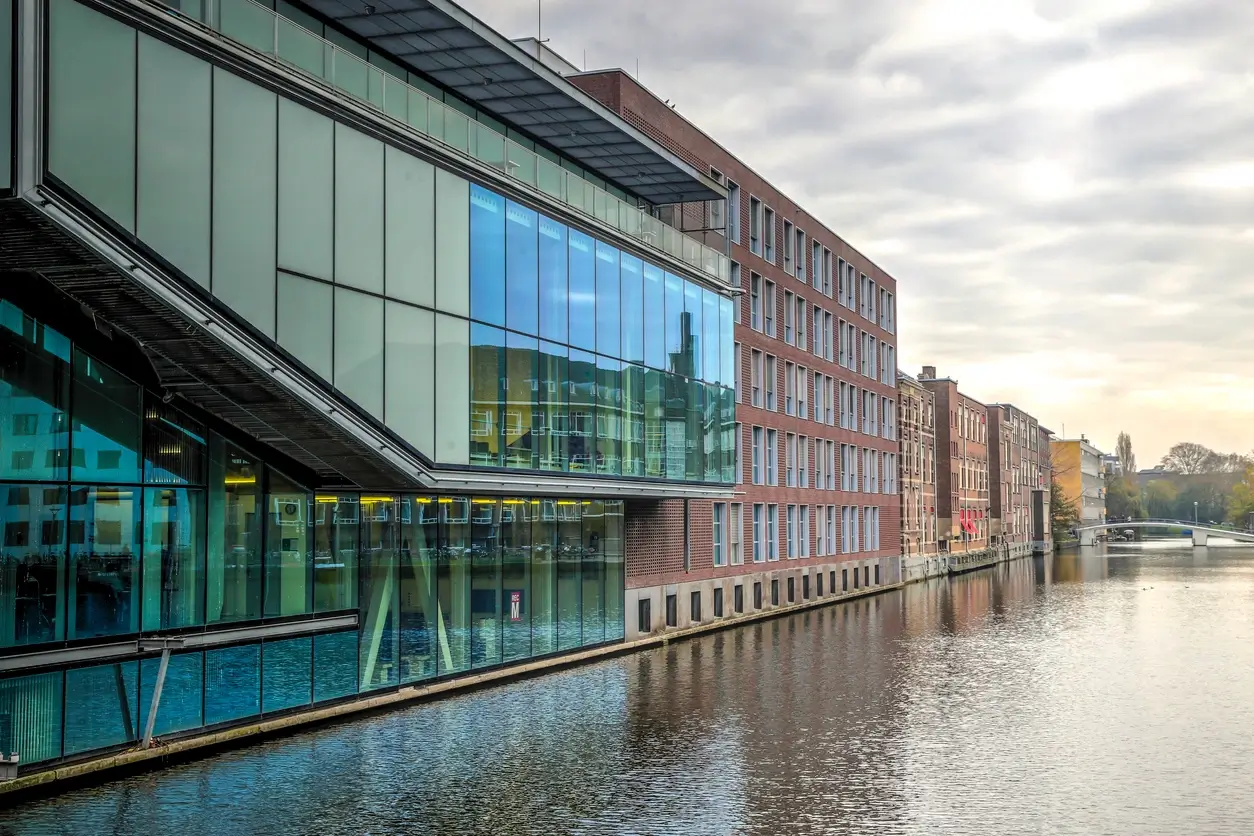
University of Amsterdam

Netherlands

France
 ° C
° C

Switzerland
 ° C
° C

Austria
 ° C
° C

Germany

Career prospects after studying social sciences
Development aid specialist

From
€2,800 - €7,000 per month
International organisations and NGOs
Social consultant

From
5 000 € - 15 000 €+ per month
Private sector and social enterprises
Cultural programmes advisor
From
3 000 € - 8 000 € per month
Cultural institutions and social organisations
Public opinion analyst

From
3 500 € - 9 000 € per month
Media and communications agencies
Development aid specialist
From
€2,800 - €7,000 per month
International organisations and NGOs
Social consultant
From
5 000 € - 15 000 €+ per month
Private sector and social enterprises
Cultural programmes advisor
From
3 000 € - 8 000 € per month
Cultural institutions and social organisations
Public opinion analyst
From
3 500 € - 9 000 € per month
Media and communications agencies
What do they think about us?
Different perspectives on the same process: students, parents and graduates. Each review concerns a different stage of the journey to studying abroad.

Business and Economic
University of Bologna
Igor

FAU Erlangen-Nürnberg
International Business Administration
Ursula

Aarhus University
Computer Science
Julianna

Fontys UAS
International Business
Marcel

Economics
UC3M
Hanna

BBA
ESADE
Amelia

Digital Entertainment
Ksenyia

Aerospace Engineering
Politechnika w Walencji
Nikodem

Aarhus University
Economics and Business Administration
Dominika
Game Development
Damian

Management
TBS
Emma

Medicine & Surgery
Sapienza University of Rome
Weronika

Maastricht University
Psychology
Anna

International Business Communication
Radboud University
Olga

Architecture
University of Malta
Amelia

Creative Business
NHL Stenden UAS
Kacper

Finance
Vrije University Amsterdam
Agata

Media and Culture
University of Amsterdam
Max
Computer Science
University of Malta
Maximilian

MBA
Universidad Europea
Hubert

IMC Krems
International Business Administration
Dominik





Find out what options you have for studying abroad
During the consultation, we will discuss the countries, universities and degree programmes best suited to your profile and explain what the application process for studying abroad looks like step by step.
Book a free consultation
Studying social sciences abroad - social sciences, anthropology, philosophy, culture and European studies

Studying social sciences abroad
Studying social sciences abroad is a good choice for people interested in society, culture, history, communication, psychology and human behaviour in a broad social context. These degree programmes allow students not only to gain knowledge, but also to develop practical skills useful in both professional and everyday life.
The most valuable benefits include:
studying in an international environment,
developing foreign language skills,
gaining experience and independence,
discovering other cultures,
broad career opportunities after graduation,
a respected degree from a foreign university,
broadening your horizons and gaining a better understanding of modern society.
Studying social sciences abroad combines knowledge, practice and personal development. For many students, it marks the beginning of a well-informed career path in areas related to culture, education, media, public administration, consulting and social analysis.
Studying social sciences abroad
Studying social sciences abroad is a good choice for people interested in society, culture, history, communication, psychology and human behaviour in a broad social context. These degree programmes allow students not only to gain knowledge, but also to develop practical skills useful in both professional and everyday life.
The most valuable benefits include:
studying in an international environment,
developing foreign language skills,
gaining experience and independence,
discovering other cultures,
broad career opportunities after graduation,
a respected degree from a foreign university,
broadening your horizons and gaining a better understanding of modern society.
Studying social sciences abroad combines knowledge, practice and personal development. For many students, it marks the beginning of a well-informed career path in areas related to culture, education, media, public administration, consulting and social analysis.
Studying social sciences abroad
Studying social sciences abroad is intended for people interested in society, culture, history and the relationships between individuals and institutions. These degree programmes help students understand how modern societies function, how social norms are formed, how cities and regions develop, and how culture influences everyday life. For many candidates, studying social sciences abroad is an opportunity to gain international experience, study in a foreign language and broaden their horizons.
Many universities in Europe and around the world offer social sciences programmes in English. This allows students to study in an international environment, discover different ways of thinking and gain practical skills valued in the job market. Foreign universities offer a wide range of degree programmes that not only enable students to gain academic knowledge, but also support their personal and social development by promoting social inclusion and preventing exclusion.
The curriculum is usually interdisciplinary. This means that it combines topics from different fields, such as social sciences, history (which is essential for understanding the roots and traditions of societies), philosophy, culture, psychology (which helps explain human behaviour), economics (as one of the fundamental social sciences supporting analysis and decision-making), law (a key element of social science programmes, particularly in an international context) and intercultural communication. Students learn to analyse modern society, interpret cultural change and understand processes taking place at local, national and international levels.
Studying social sciences abroad also provides opportunities to gain experience in project work, research and teamwork. Foreign universities offer different levels of study, such as bachelor’s and master’s degrees, allowing students to plan their educational path flexibly. Graduates of these programmes are prepared for careers in public administration, education, media, culture, international organisations, public institutions, the social sector and consulting.
Social sciences programmes abroad are available at both private and public universities, where tuition is often free or more affordable. Universities are key academic institutions offering social sciences programmes, providing a wide range of specialisations and a high standard of education.
Studying social sciences abroad
Studying social sciences abroad is intended for people interested in society, culture, history and the relationships between individuals and institutions. These degree programmes help students understand how modern societies function, how social norms are formed, how cities and regions develop, and how culture influences everyday life. For many candidates, studying social sciences abroad is an opportunity to gain international experience, study in a foreign language and broaden their horizons.
Many universities in Europe and around the world offer social sciences programmes in English. This allows students to study in an international environment, discover different ways of thinking and gain practical skills valued in the job market. Foreign universities offer a wide range of degree programmes that not only enable students to gain academic knowledge, but also support their personal and social development by promoting social inclusion and preventing exclusion.
The curriculum is usually interdisciplinary. This means that it combines topics from different fields, such as social sciences, history (which is essential for understanding the roots and traditions of societies), philosophy, culture, psychology (which helps explain human behaviour), economics (as one of the fundamental social sciences supporting analysis and decision-making), law (a key element of social science programmes, particularly in an international context) and intercultural communication. Students learn to analyse modern society, interpret cultural change and understand processes taking place at local, national and international levels.
Studying social sciences abroad also provides opportunities to gain experience in project work, research and teamwork. Foreign universities offer different levels of study, such as bachelor’s and master’s degrees, allowing students to plan their educational path flexibly. Graduates of these programmes are prepared for careers in public administration, education, media, culture, international organisations, public institutions, the social sector and consulting.
Social sciences programmes abroad are available at both private and public universities, where tuition is often free or more affordable. Universities are key academic institutions offering social sciences programmes, providing a wide range of specialisations and a high standard of education.
Degree programmes
Social sciences degree programmes abroad are highly diverse, allowing candidates to choose the programme best suited to their interests. Many universities offer a wide range of degree programmes that provide education in different areas of the social sciences. Many institutions offer bachelor’s and master’s degrees, as well as postgraduate programmes for graduates who want to develop specific areas of expertise.
The most commonly chosen degree programmes in the social sciences include:
• social sciences
• anthropology
• philosophy
• social geography and human geography
• intercultural communication
• cultural studies
• psychology
• journalism
• sociology
• public administration
• social policy
• economics
• culture and society studies
At some universities, programmes also include specialisations combining social sciences with modern technologies, management, law, education or media. This allows students to prepare more effectively for work in a rapidly changing society.
Degree programmes
Social sciences degree programmes abroad are highly diverse, allowing candidates to choose the programme best suited to their interests. Many universities offer a wide range of degree programmes that provide education in different areas of the social sciences. Many institutions offer bachelor’s and master’s degrees, as well as postgraduate programmes for graduates who want to develop specific areas of expertise.
The most commonly chosen degree programmes in the social sciences include:
• social sciences
• anthropology
• philosophy
• social geography and human geography
• intercultural communication
• cultural studies
• psychology
• journalism
• sociology
• public administration
• social policy
• economics
• culture and society studies
At some universities, programmes also include specialisations combining social sciences with modern technologies, management, law, education or media. This allows students to prepare more effectively for work in a rapidly changing society.
Bachelor’s studies
Social sciences programmes abroad are very often available at bachelor’s level. This is the first level of higher education and provides broad theoretical and practical foundations in social sciences, culture, philosophy and anthropology.
Bachelor’s programmes in this field are most often chosen by people who want to:
• begin studying at a university abroad,
• study in English,
• earn a degree recognised throughout Europe,
• develop analytical and communication skills,
• prepare for employment or continue their education at master’s level.
Bachelor’s programmes usually last 3 years, although their structure may vary slightly depending on the country and university. After graduating, students can continue their education at master’s level or begin their professional career.
Bachelor’s studies
Social sciences programmes abroad are very often available at bachelor’s level. This is the first level of higher education and provides broad theoretical and practical foundations in social sciences, culture, philosophy and anthropology.
Bachelor’s programmes in this field are most often chosen by people who want to:
• begin studying at a university abroad,
• study in English,
• earn a degree recognised throughout Europe,
• develop analytical and communication skills,
• prepare for employment or continue their education at master’s level.
Bachelor’s programmes usually last 3 years, although their structure may vary slightly depending on the country and university. After graduating, students can continue their education at master’s level or begin their professional career.
Discover your study abroad opportunities.
 100% free, no-obligation consultation
Connecting with you on your terms
Response within 24 hours
An individual approach to each candidate
I confirm that I have read the Privacy Policy. and the GDPR information.