
Netherlands
Are you wondering whether studying in the Netherlands is the right choice? According to data from NUFFIC, in the 2024/2025 academic year there were 6,005 students from Poland studying in the Netherlands—and it’s easy to see why. EU/EEA citizens pay only the statutory tuition fee at most public universities, which for 2026/2027 is just €2,695, a fraction of the costs in other countries. Another reason is that 5 Dutch universities are ranked in the TOP 100 worldwide according to the Times Higher Education World University Rankings 2026.
Are you considering studying in the land of tulips and windmills? Here you will find all the essential information to help you decide whether the Netherlands is the right country for you. Let us guide you through the fascinating world of studying in the Netherlands! :)
Studying in the Netherlands in a nutshell
- Tuition fees (EU/EEA): statutory rate, updated annually (e.g. 2026/27: €2695)
- Types of universities: WO (more academic) vs. HBO (more practical)
- Deadlines: Studielink from October 1; numerus fixus often until January 15
- Cost of living: the biggest expense is accommodation — start searching early
- Work: EU citizens don’t need a permit, but remember BSN and insurance
Studying in the Netherlands – is it worth it?
Studying in the Netherlands is becoming increasingly attractive for international students and not without reason. After Brexit, which significantly reduced access to studying in the United Kingdom, the Netherlands has become one of the most popular destinations among students from Poland.
Are you wondering whether it is really worth choosing education in this country? Below are a few arguments that will help you answer for yourself whether it is worth choosing to study in the Netherlands.
Find out more

-
Quality of education – there are many top institutions among Dutch universities. In the list of the top 100 universities in the world, as many as 5 Dutch universities are included!
-
Cost of studies – this point will be developed further, but in short – the Netherlands offers scholarships and support programmes that can significantly reduce the cost of studying.
- International student atmosphere – the Netherlands is a very open and tolerant country, and thanks to its education system it attracts tens of thousands of international students every year. Studying there, you can be sure you will experience an international environment.
- University infrastructure – the Netherlands is a well-developed and wealthy country, which is also reflected in the facilities of its universities. Studying there, you can expect education using the latest technologies on a beautiful campus.
- Number of study programmes – the country offers a very wide range of study programmes, which means that regardless of your interests, you will find your ideal option there.
- Education system – the division in the Netherlands into research universities and universities of applied sciences allows it to meet the expectations of both theory-oriented and practice-oriented students. This option does not exist in many other European countries!
- Career prospects – it is not only a country of tulips and windmills, but also of innovation and entrepreneurship. Studying in the Netherlands can open the door to an international career.
Do these arguments convince you? What do you think – is it worth choosing to study in the Netherlands?
Education system
The teaching method in the Netherlands is based on respect for the individual opinions and beliefs of each person. This approach is not limited to educational institutions but is also a national characteristic. It forms the foundation of the Netherlands’ diverse and pluralistic society.
Interaction during classes is highly valued. You are expected to analyze the knowledge presented, develop and express your own opinion. You have the freedom to ask questions and take a critical approach to what lecturers or other students say. Use your creativity to apply newly acquired knowledge.
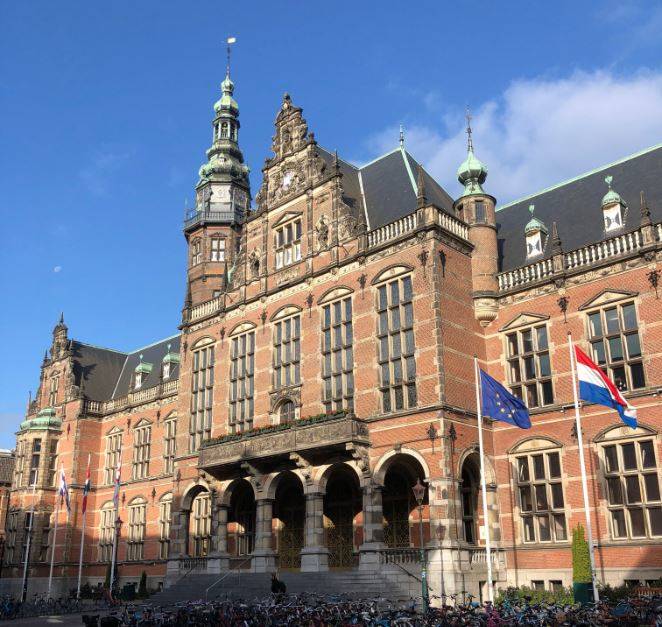
There are two main types of higher education institutions in the Netherlands: universities of applied sciences and research universities. Technical universities are also a popular option, located in two Dutch cities: Delft and Eindhoven. People choosing to study in the Netherlands have different preferences regarding teaching approaches, the balance between theory and practice, and study programmes – the variety of university types means that everyone can find a suitable study programme in this country.
A ten-point grading system is used both in secondary education and higher education. A grade of 10 is the highest, and 6 is the minimum passing grade.
Universities
Are you wondering what the most popular universities in the Netherlands are? Below we present a list of the most popular choices among Polish students.
Perhaps soon you will also be studying at one of these universities ;)
Research Universities
Universities of Applied Sciences
The most popular technical universities

Studies in the Netherlands – research universities
Research universities, also known as research universities, are institutions focused on advanced scientific research and expanding knowledge in various fields. They are known for their high academic standards and offer study programmes based on a theoretical approach and research.
Students at research universities have the opportunity to delve deeply into their field and participate in research conducted by outstanding scholars. Research universities place particular emphasis on developing analytical skills, critical thinking, and the ability to independently explore topics.
Examples of research universities in the Netherlands include:
- University of Amsterdam
- Erasmus University Rotterdam
- Leiden University
- Utrecht University
- University of Groningen
- Tilburg University
Studies in the Netherlands – universities of applied sciences
Universities of applied sciences are educational institutions with a strong focus on preparing students for specific professional fields. Their main goal is to provide practical skills and prepare students for specific careers. Study programmes at universities of applied sciences usually last four years, with one year dedicated to professional practice.
They are characterized by frequent use of interactive teaching methods, such as group projects, internships, and work placements. Thanks to this, students gain real practical experience, enabling them to successfully enter the job market.
Here are some other examples of universities of applied sciences in the Netherlands:
- Avans University of Applied Sciences
- NHL University Stenden
- Breda University of Applied Sciences
- The Hague University of Applied Sciences
- Inholland University of Applied Sciences
The most popular study programmes – studying in the Netherlands
In the Netherlands, you can study in English in over 500 bachelor’s programmes and 1,500 master’s programmes. The most popular fields of study in the Netherlands include:
- business and economics studies, such as marketing, communication or human resource management
- psychology
- law studies
- medical studies
- fields related to medicine that focus on related areas
- engineering
- social sciences
- humanities
- architecture studies
- interdisciplinary studies
We guarantee you one thing – thanks to the wide range of programmes in the Netherlands, you will definitely find your dream option there! :)
Business programmes – studying in the Netherlands
Psychology – studying in the Netherlands
Law studies in the Netherlands
Medicine and related fields – studying in the Netherlands
Other study programmes

Studying in the Netherlands – requirements, documents and qualifications
When planning to study at a Dutch university, it is worth understanding that the application process consists of several stages. In the Netherlands, requirements vary depending on the university – factors that may determine the success of your application include your approach and motivation, entrance tests, an interview, your grade average, and your final exam results. If you want your application to be handled by a team of specialists who will guide you through the entire process from A to Z, contact us or book a free consultation.
Find out more

Secondary school diploma and grades
The Polish secondary school leaving certificate is accepted by all universities in the Netherlands. You do not need an international IB diploma, which is a common myth. The only thing you need to do is translate your certificate into English (the translation must be done by a certified translator).
Dutch universities generally do not pay much attention to grades themselves. The main evaluation criterion is the final exam result, but there are no specific minimum requirements. However, it is worth checking in advance whether a given programme requires specific subjects at an advanced level – some programmes require knowledge of mathematics, physics, biology or chemistry at a higher level.
Although grades are often not the main evaluation criterion, universities require a transcript of grades from the entire secondary school or from the last two years. In such a case, it is enough to ask the school principal or another authorized person to prepare the appropriate certificate.
Language certificates (IELTS, TOEFL, Cambridge)
In the Netherlands, applicants must prove their English language proficiency. Universities most often accept IELTS (minimum 6.0–6.5), TOEFL, and Cambridge certificates. In the case of IELTS, a score of at least 6 or higher is required, and for TOEFL 550 points in the paper-based test or 213 in the computer-based test. Remember that the required level may vary depending on the programme.
TOEFL assesses language skills in four areas: reading, writing, listening, and speaking. The cost of the exam is 215 USD, and the maximum score is 120 points. IELTS also evaluates the same four skills, and the result is presented on a scale from 1 to 9. The certificate is valid for two years, after which it may be necessary to retake the test.
All universities also accept the Cambridge exam. If you choose this option, remember that FCE is very rarely accepted. You will need to take the C1 Advanced exam.
We recommend preparing well in advance for the exam, for example by taking a dedicated IELTS course.
Motivation letter and CV
Most Dutch universities pay particular attention to the motivation and personality of the applicant. The motivation letter is often an underestimated part of the application among Polish students, yet it can determine success. Universities want to see that you understand the programme and can explain why you are the right candidate.
The motivation letter should be professional, linguistically correct, and within the word limit specified by the university. It is best to start writing it at least a few weeks before the application deadline. Avoid generalities and write specifically about your experiences. The CV is another document that can significantly influence the success of your application. It should clearly and accurately present your experiences relevant to the chosen study programme.
References and additional application documents
A reference letter is occasionally required for bachelor’s applications in the Netherlands, but it is often mandatory for master’s programmes. Ideally, the referee should be someone who knows you as a student. References cannot be written by friends or relatives, as they will be rejected – they should present a neutral point of view.
Depending on the chosen university, additional documents may also be required, such as a portfolio for artistic or creative programmes. In addition to the motivation letter, an essay may also be required, usually in the form of answers to specific questions prepared by the university.
Requirements for Numerus Fixus programmes
Numerus Fixus programmes are programmes with a limited number of places. The deadline for these programmes is January 15. This applies, among others, to all psychology programmes, some business programmes, certain medical-related programmes, and selected creative programmes.
When applying for Numerus Fixus programmes, you can choose only two such programmes at the same time. An exception is medicine (currently available only in Dutch), where applying for this programme prevents you from choosing another Numerus Fixus programme. The admission process includes additional selection stages, such as more documents, interviews, or tasks to complete.
Application for Studies in the Netherlands
When should you start the application process?
Applications for studies in the Netherlands open on October 1, one year before the planned start of studies. If you are planning to study right after graduation, you should start preparing at the beginning of your final year of secondary school or even earlier. The deadline for Numerus Fixus programmes is January 15, while for other programmes you have time until May 1 or August 1 / 15. It is also worth remembering that individual programmes may have their own deadlines set by universities (e.g. March 1 for selected programmes at Erasmus University Rotterdam, or February 1 for PPLE at the University of Amsterdam).
The earlier you submit your application, the sooner you will receive a decision. The exception is the selection process for Numerus Fixus programmes, which lasts three months – you will receive the results on April 15.
Find out more

Registration in the Studielink system
Studielink is the central application portal through which all applications for studies in the Netherlands at public universities are submitted. Some private universities do not use Studielink, so it is worth first checking whether the application process is carried out through this system.
Registration requires a passport or a European ID card. You go to www.studielink.nl, choose the language (available: Dutch, English or German) and create an account. The system will ask you to upload a scanned identity document in the appropriate format. Then you fill in personal data, home address and education details. After completing registration, you will receive an activation link by email.
Choosing universities and programmes (maximum 4)
You can apply for a maximum of four study programmes. However, in the case of Numerus Fixus programmes, the limit is two choices. Medicine (currently available only in Dutch) is an exception – when applying for this programme, you cannot add another one. This means that you can apply for medicine and dentistry in the same year, but not for medicine at two different universities.
Programmes can be changed in the Studielink system until you complete the application through the university’s internal portals. After adding each university, check your email – within 24–48 hours you will receive information about the next steps.
Submitting documents to selected universities
After registering in Studielink, the application moves to the universities’ internal systems, where you upload all required documents.
Remember to regularly check your email – you may receive a message requiring an immediate response or additional information.
Waiting for an offer
You will receive a response within a few weeks. Universities usually make decisions within a maximum of three months after the application deadline. For Numerus Fixus programmes, you can expect additional selection procedures, such as tests, interviews or assignments.
What to do after receiving an offer
In the case of Numerus Fixus programmes, after receiving a positive decision you have 14 days to accept the offer. If you do not do so, the offer will be withdrawn and the place will automatically be given to a student from the waiting list. For other programmes, the time to accept the offer may vary. After confirming your place, you must complete formalities related to your move, including confirming admission, paying tuition fees, and arranging accommodation and health insurance. It is also often necessary to go through the so-called “matching” process, which helps assess whether you are a good fit for the programme.
Cost of living and studies
Tuition fees for EU and non-EU citizens
The tuition fee for one year of studies in the Netherlands for EU citizens is €2695 per year (statutory fee for EEA/EU students for the academic year 2026/2027 – updated annually. Source: Dienst Uitvoering Onderwijs). The Dutch government covers most of the programme costs, which means that students from Poland pay only a fraction of the real cost of education. The amount is the same regardless of the chosen programme or university, although in some cases it may be higher – however, this is very rare. For example, at the University of Amsterdam, the PPLE programme costs €5659 per year.
Students from outside the EU must expect higher costs. Tuition fees range from €8000 to €20000 per year, depending on the programme and university.
Check if you can study for free in the Netherlands
Cost of living in different cities
Monthly student expenses range from €800 to €1400. Accommodation is the biggest expense. In student dormitories you pay from €400 to €950 per month, while private housing costs €500–900.
The choice of city has a huge impact on your budget. In Amsterdam, the monthly cost of living is €1000–1500, in Rotterdam or The Hague up to €1400, while in Leeuwarden or Enschede €850–1100 is enough. In Tilburg you will spend €960–1250, and in Maastricht €940–1250 per month.
Find out more

Accommodation:
-
Dormitory rental: from €400 to €950 per month.
-
Private room rental: from €500 to €750 per month, and in Amsterdam and Rotterdam up to €800–900 per month.
- Studio apartment rental: from €650 to €1300 per month.
Food:
-
Average supermarket expenses are €200–350 per month.
-
Food prices are very similar to those in Poland. By planning meals and cooking at home, you can effectively control your expenses.
Eating out:
-
Meal in an inexpensive restaurant: around €15–25.
-
Meal in a mid-range restaurant: €20–30.
-
Coffee with a cake in a café: approx. €3–5.
Transport:
-
A bicycle is the cheapest and most popular way of getting around cities – the cost of buying a bike is around €100–200 (one-time).
-
Monthly public transport ticket: €40–70 depending on the city (Amsterdam, Rotterdam, The Hague or Utrecht are more expensive).
Leisure and free time:
-
Cinema: around €10 per ticket.
-
Gym: a monthly membership costs on average €30–40.
-
Social outings and student parties require an additional budget – often €100–200 per month.
Other expenses:
-
Books and study materials: on average €30–80 per month (sometimes you can buy used ones cheaper or use libraries).
-
Internet and phone: subscription costs around €20–40 per month.
More about how much studies in the Netherlands cost
Accommodation and dormitories
Many universities in the Netherlands offer modern, well-equipped dormitories, and some even entire student campuses. These include not only dormitories, but also cafés, shops, fitness clubs, and study spaces.
Despite this, finding accommodation is the biggest challenge for students in the Netherlands. The country is facing a housing crisis, but finding accommodation is still possible. For example, NHL Stenden University of Applied Sciences offers a guarantee of receiving a dormitory place. It is also important to submit a strong dormitory application – often the timing of submission matters, and places are allocated on a “first come, first served” basis.
The Housing Office helps find accommodation, but you must already be conditionally accepted by the university. The cost of renting a room is around €400–950 per month, and an apartment €700–1200 (prices for 2025/26, plus one-time fees – housing fee €245–675, deposit).
Scholarships for studying in the Netherlands
The Netherlands provides generously funded government loans that are available to all EU students, both at the bachelor’s and master’s levels. Students can apply for financial support that covers tuition fees as well as living expenses, making studying in the Netherlands one of the most financially accessible options.
Study financing in short:
-
Basic Grant - The basic grant amounts to €324.52 per month. The only condition is not living with your parents during your studies.
-
Supplementary Grant - It can amount to a maximum of €491.08 per month. The amount depends on your parents’ income (which means it can range from €0 to €491.08 per month).
-
Regular Loan - A student loan with an interest rate of 2.57%. Many students choose this option due to favorable repayment conditions. Currently (academic year 2026/27), the maximum amount is approximately €315.17 per month.
-
Travel Product - Allows free travel across the Netherlands on weekdays or weekends (students choose the option that suits them best). If you choose weekdays, you still receive around a 40% discount on weekends.
-
Tuition Fees Loan - A student loan covering tuition fees during your studies, under the same conditions as the regular loan.
-
Rent Benefit - A housing allowance. To qualify, your accommodation must meet certain conditions.
-
Erasmus Mundus offers financial support covering tuition fees, living costs, travel, and insurance. Polish citizens can apply, and the scholarship covers tuition (up to €9000/year), living costs, travel (up to €3000/year), and insurance. The application deadline is between October and January.
-
Some universities offer their own scholarships (e.g. HAN), which Polish students can apply for if they pay international tuition fees.
Important: non-repayable grants (basic grant, supplementary grant, travel product) do not need to be repaid if the student completes their studies within 10 years of starting. If you drop out and do not finish your studies, these forms of support must be repaid under conditions similar to the regular loan. The amounts provided are valid for August–December 2026 and are updated every 6 months. Source: DUO.
Find out more

Financial support for working students
The DUO system provides support for students working a minimum of 32 hours per month. The Basic Grant amounts to €324.52 per month, and the Supplementary Grant, depending on parents’ income, can reach up to €491.08. The Travel Product offers free public transport on weekdays. To receive these benefits, you must meet the requirement of working at least 32 hours per month.
You may also receive a healthcare allowance of up to €130 per month.
Student loans on favourable terms
The tuition fee loan is paid directly to the university and amounts to €2695 per year. The interest rate is 2.33%, and the repayment period is spread over 35 years. The Regular Loan is an additional loan of up to €315.17 per month with an interest rate below 2.57%.
Repayment begins only after reaching a minimum income of €1500 per month. If after 35 years the loan is not fully repaid, the remaining amount is written off.
Note: Data on fees, deadlines, and financial support may change every year.
Working during studies
To receive certain forms of financial support (basic grant, supplementary grant, regular loan or travel product), you must work at least 32 hours per month (on average 8 hours per week). Thanks to a strong job market, high English proficiency among the Dutch, and an average of 12–17 contact hours per week at universities, combining work with studies is not difficult.
In the Netherlands, 70% of students work according to Eurostat data – the country ranks number 1 in Europe in terms of working students.
Remember that by working, in addition to receiving grants (up to over €1150 per month including rent benefit and healthcare allowance), you will also earn a monthly salary (on average €250–450 per month for students working 32 hours monthly).
EU citizens do not need a work permit in the Netherlands. You can work any number of hours per week, which is a huge advantage. Students earn on average €409 from part-time work, mainly in hospitality and retail.
However, taking up work involves the obligation to purchase Dutch public health insurance, starting from €60 per month. Before that, you must register at the municipality and obtain a BSN number. Without it, you cannot open a bank account in the Netherlands or work legally. It is also worth applying for DigiD, an electronic identification system used for handling official matters online.
Working during your studies allows you not only to cover living costs but also to gain valuable professional experience. If you are interested in finding a job in this country, a useful tool may be the Jooble portal. Browse job offers in the Netherlands and explore the job market.
Contact form

Write to us and we will help you study abroad
Studies in the Netherlands – student opinions and student life
The Netherlands is extremely student-friendly, and campus life is full of opportunities. Polish students in the Netherlands most often highlight the high quality of education and the international environment. Lecturers are experts in their fields, and classes are conducted at a high level.
Small class groups allow for closer contact with lecturers, who are very helpful not only in academic matters but also in everyday issues. Students in the Netherlands can gain practical skills thanks to a wide range of internships.
Students appreciate the openness of the Dutch. In the Netherlands, 90% of people speak English fluently, which makes daily communication easier for international students. The country’s central location in Europe also provides opportunities to travel both within the Netherlands and across Europe.
Universities offer modern facilities, access to computers and libraries, and clear online platforms for communication with lecturers. However, it is worth remembering that the system requires a lot of independent study. Lecturers place strong emphasis on practical classes and workshops, where you apply knowledge in practice.
See what students we helped get into universities in the Netherlands say:
Weronika’s opinion
Weronika studies at Erasmus University Rotterdam in Arts and Culture.
Kacper studies at NHL Stenden University of Applied Sciences in Creative Business.
Olga studies at Radboud University in International Business Communication.
Ania studies at Maastricht University in Psychology.

Most popular cities to study in the Netherlands
So, since we know that studying in the Netherlands is so attractive and that the application process is within reach, the question arises: which cities are worth studying in?
Studying in the Netherlands offers a wide range of opportunities, both academically and in terms of lifestyle. The choice of city and university can significantly impact your career and academic experience:
Find out more
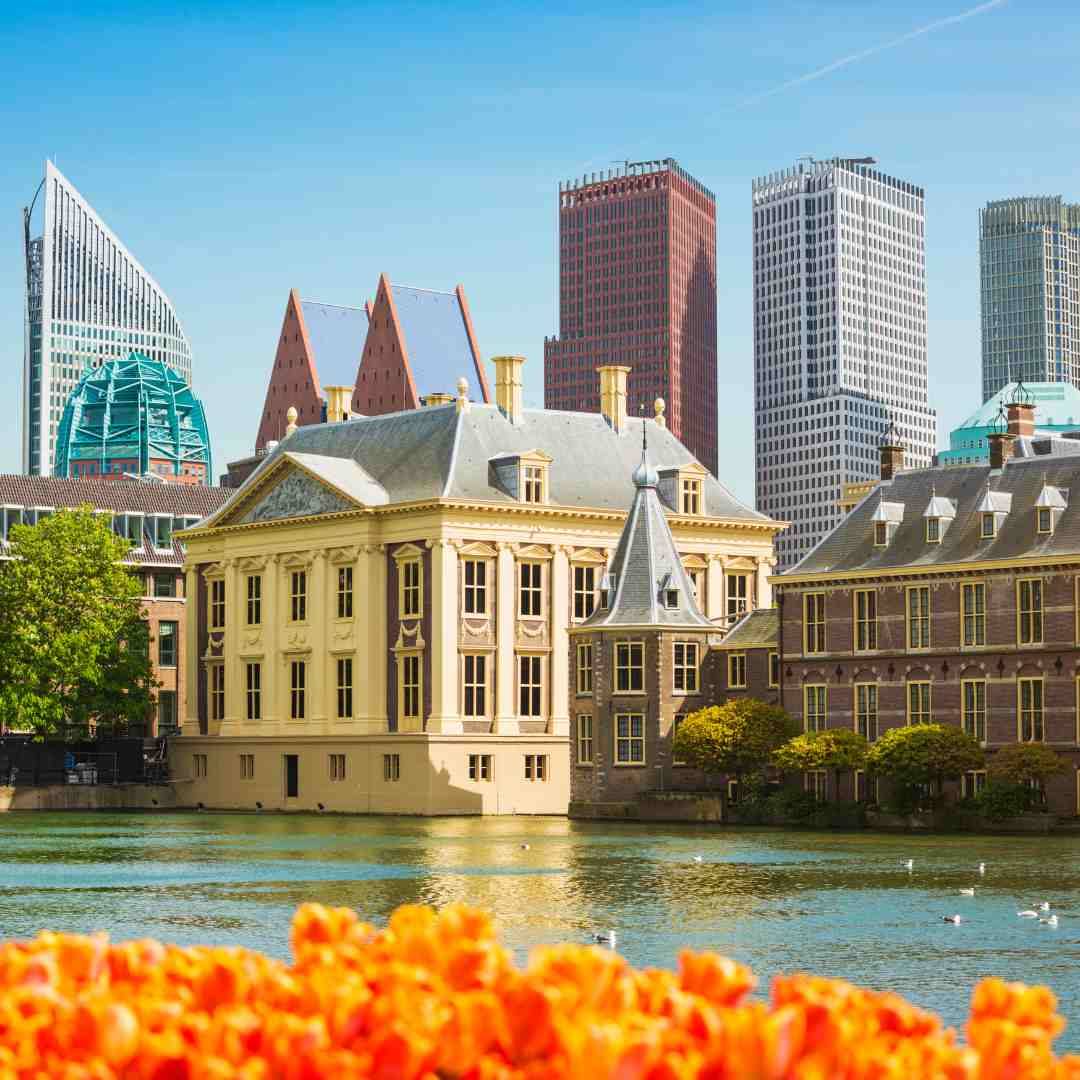
- Amsterdam is certainly the first city that comes to mind. It is a vibrant capital with an international character and several excellent universities. Additionally, it is the largest city in the Netherlands, where it is impossible to get bored. However, the Netherlands is not only Amsterdam. There are many other interesting cities that are definitely worth considering.
- Rotterdam, known for its port and strong focus on trade and business. For aspiring entrepreneurs and managers, Rotterdam can be a true educational hub, but not only that – the city is home to two universities offering a wide range of programmes in English. The level of education is excellent, and the city itself, which is the second largest in the Netherlands, has a lot to offer (and is also cheaper than Amsterdam).
- The Hague is often considered the "world capital of peace and justice", being the seat of the International Court of Justice and many other international organizations. It is also the third largest city in the Netherlands and offers many programmes taught in English.
- Utrecht is known for its high quality of education and a student-centered approach. The city is located in the central part of the country, allowing you to reach the capital in less than an hour.
- Breda, a beautiful city with around 200,000 inhabitants, offers many interesting study programmes and impresses with its charm and cultural richness. It is a picturesque city that attracts thousands of students from all over the world every year.
- Groningen is another city worth considering, especially if you are a young student looking for a lively student environment.
- Leeuwarden, the capital of Friesland, whose universities are known for innovative programmes related to technology and sustainability. Located in a quieter part of the Netherlands, the city attracts students with its atmosphere and lower costs.
As you can see, studying in the Netherlands offers many options when it comes to choosing a city! Remember that we have only presented some of them – there are many more possibilities in this country. Despite its small size, the Netherlands is quite diverse in terms of opportunities offered by different cities. Choose a destination that best meets your expectations both in terms of education and lifestyle!
Studying in the Netherlands offers a wide range of opportunities, both academically and in terms of lifestyle. The choice of city and university can significantly impact your career and academic experience. The Netherlands offers not only high-quality education but also the opportunity to develop in a cosmopolitan environment, which is invaluable in today’s globalized world.
Do you want to study in the Netherlands? Apply with Eduworld
By applying with our support, you go through the admission process step by step with the help of specialists. The entire application process will be not only much simpler and less time-consuming for you, but above all effective.
With our comprehensive support, you can count on help from A to Z. We will accompany you at every stage of the application process for studying abroad: choosing programmes, preparing documents, monitoring deadlines, preparing your motivation letter, CV and other documents, as well as providing organizational support before departure (including help with finding accommodation). This way, you minimize the risk of mistakes and save time.
At EduWorld, every year we help hundreds of people get into their dream studies abroad. Each year, we support many applicants in gaining admission to universities in the Netherlands – our students study at every Dutch university.

Contact form
Write to us and we will help you study abroad
Frequently asked questions
What does the application process look like with our comprehensive support?
Is it difficult to get into universities in the Netherlands?